IPAX Foundation Layer: We make your Design System manageable again
You don't have to rebuild your Design System for it to evolve.
Every Design System starts as a design tool. As it grows, it runs into a problem native to software engineering: combinatorial complexity.
Decisions multiply, and their combinations become unmanageable. For example, a mature system can have:
- 2 modes: light / dark
- 6 surface contexts: page / section / component / card / modal / overlay
- 3 semantic groups: OK / Warning / Error
- 2 densities: web / touch
- 4 button variants: primary / secondary / outline / ghost
- 6 interaction states: default / hover / focus / active / disabled / invalid
For buttons alone, that’s 2 × 6 × 3 × 2 × 4 × 6 = 1,728 possible combinations. Maintaining the system is a headache; auditing its accessibility, a project in itself. And AI doesn’t fix it, because it doesn’t suffer the complexity: it just spreads it around.
Reducing decision complexity
IPAX Foundation Layer gives your Design System an architecture that absorbs that complexity into its definitions and combination rules. The combinations stay; what changes is how many decisions it takes to produce them. They’re reorganized so they become manageable, scalable, accessible and auditable, from a bounded set of core tokens that every variant derives from.
IPAX doesn’t replace what already works. It adds to your governance, your component library, and your team. It works with what you have and changes the architecture underneath.
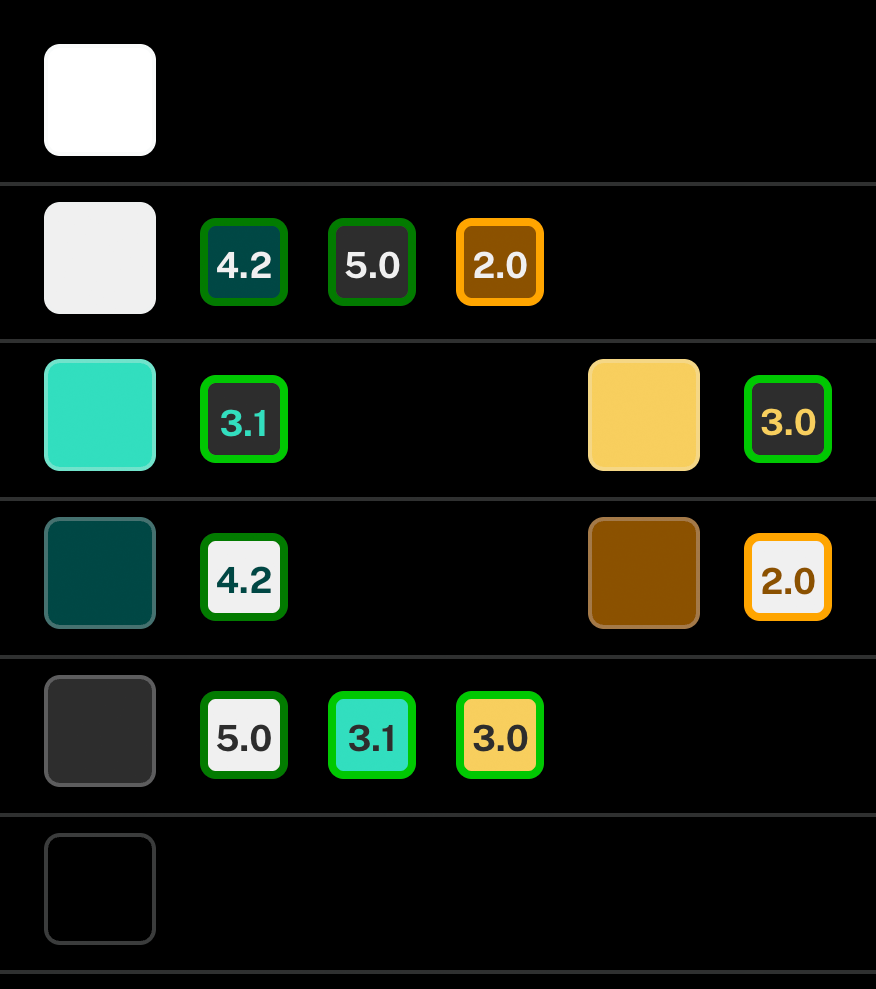
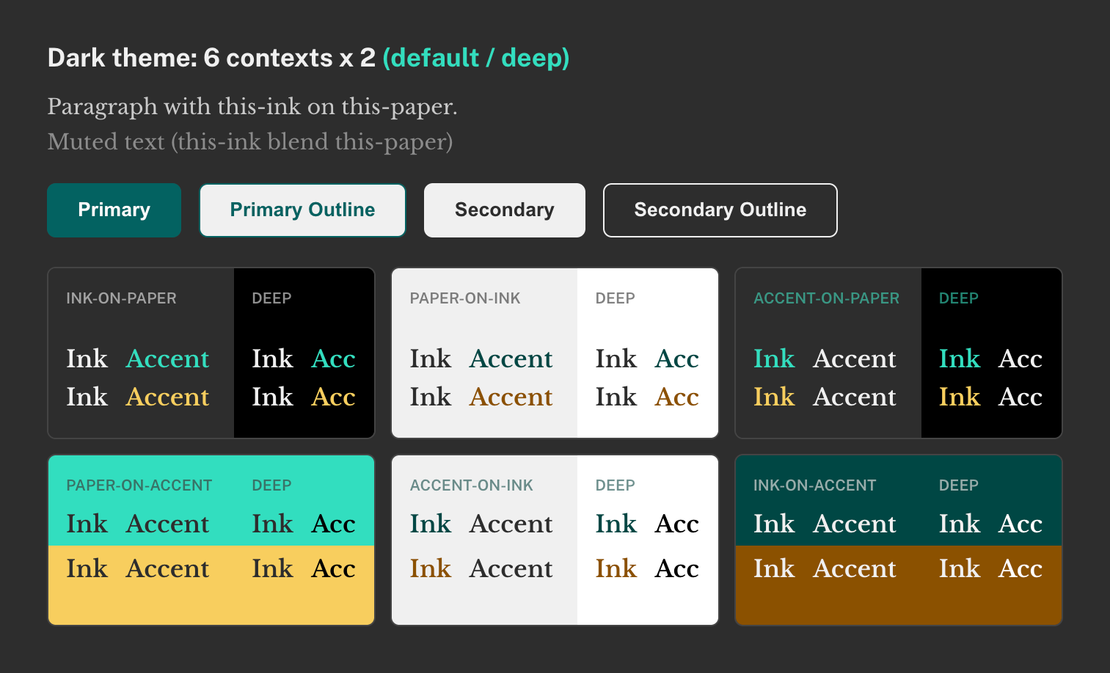
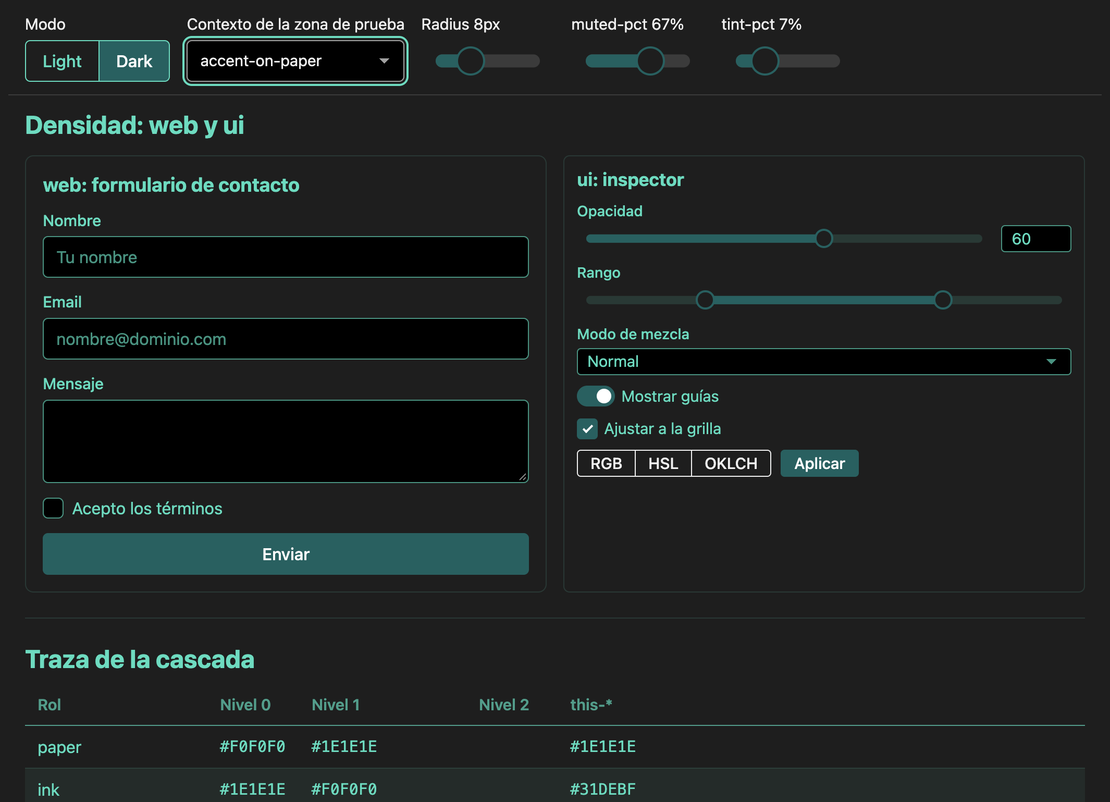
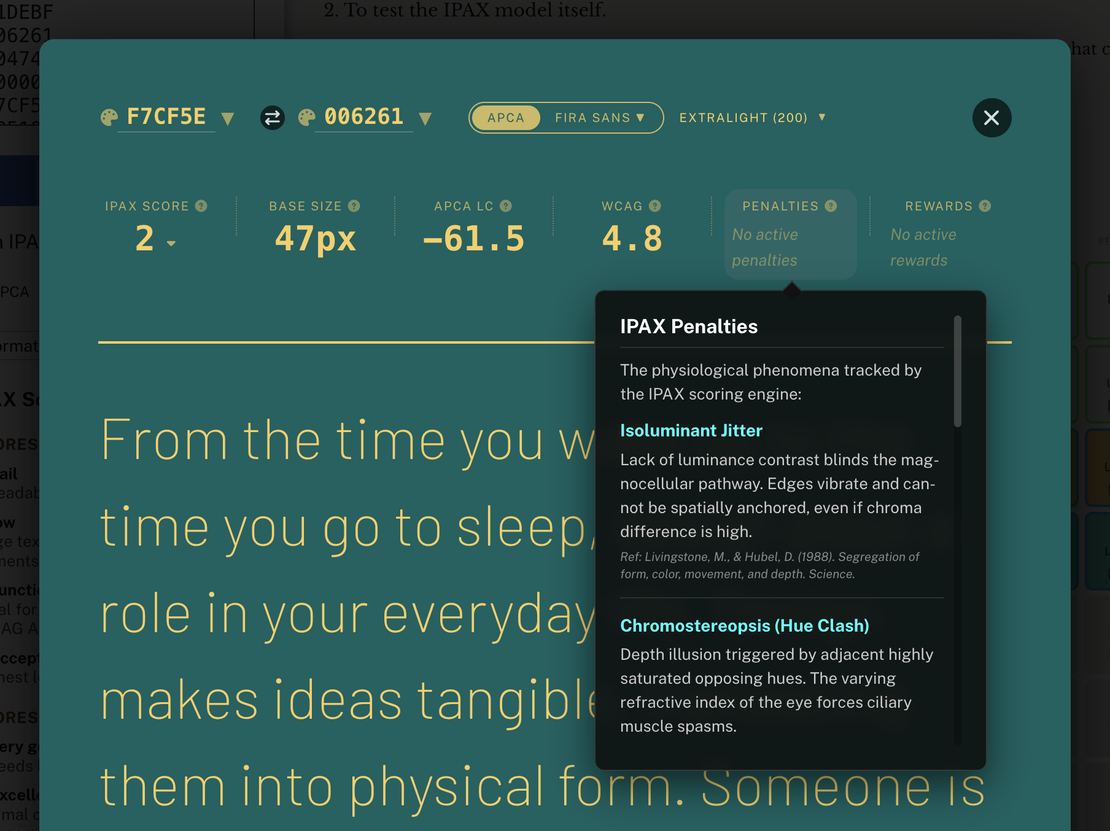
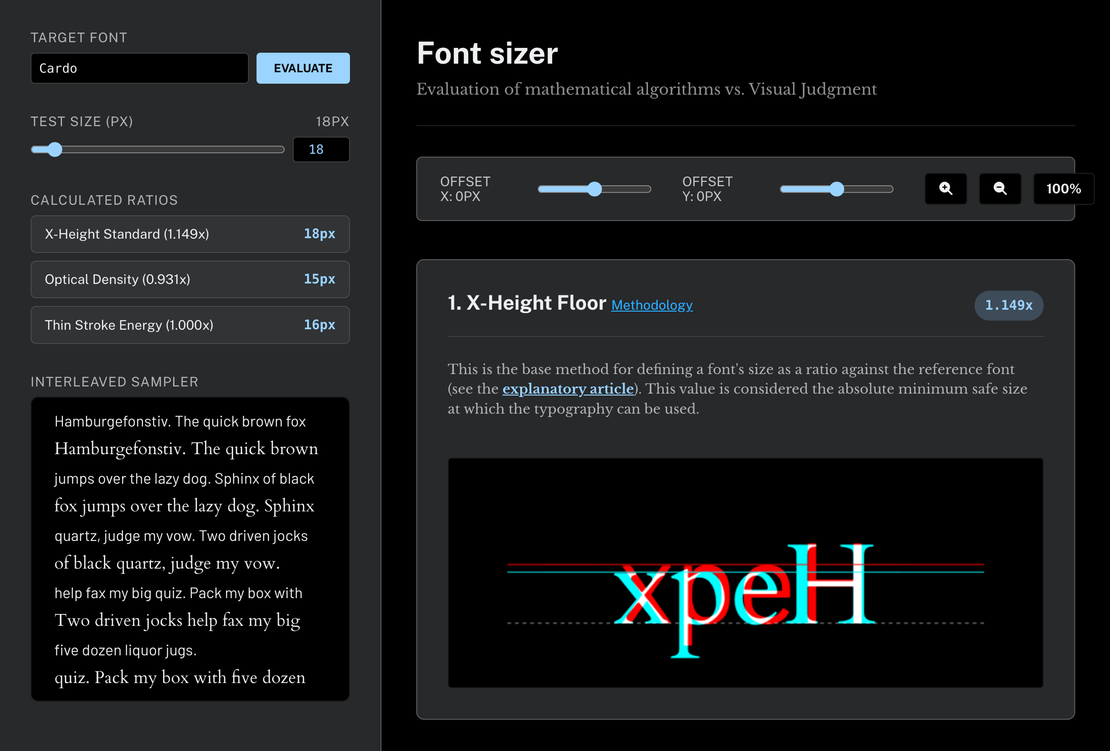
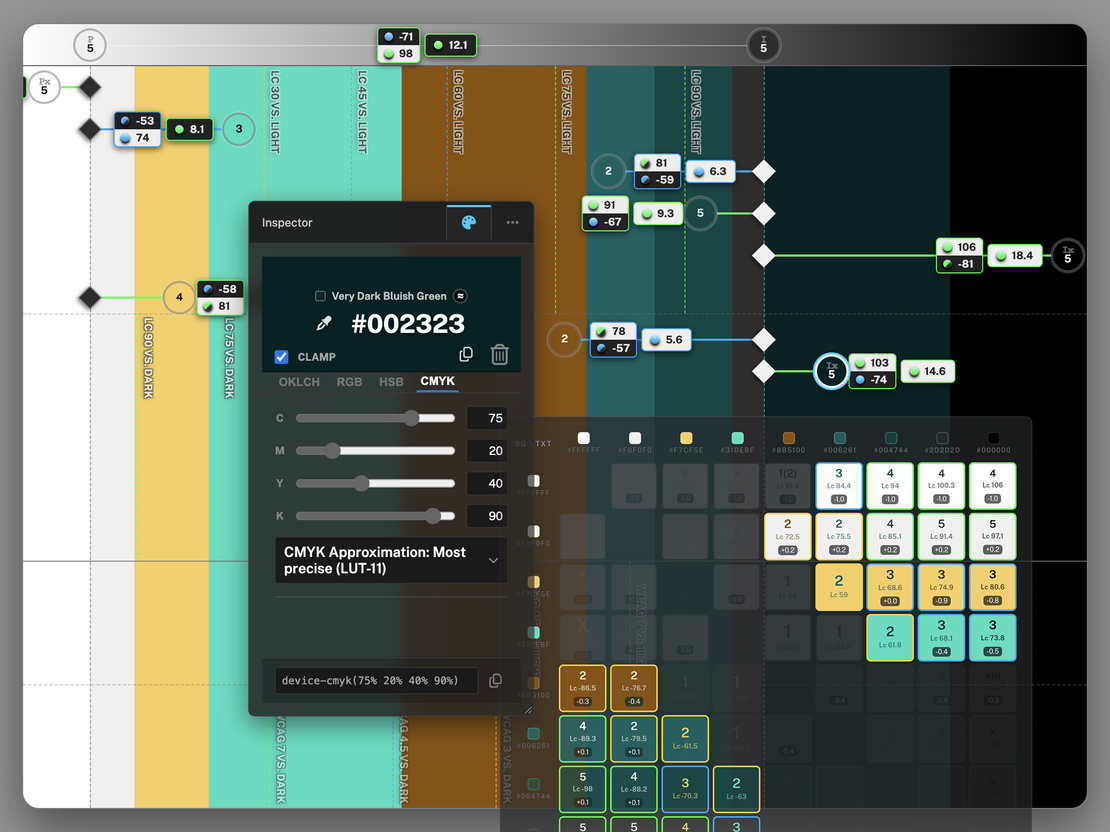
The IPAX system derives every possible variant of the Design System from a manageable set of concrete decisions, with an accessible color and typography architecture, WCAG 2 / APCA by design.
Signs your Design System is becoming unmanageable
- Adding a component means touching tokens in several places.
- A color change forces you to review light and dark separately.
- A minor tweak breaks components that were already working.
- There are tokens nobody can quite explain.
- There are overrides that contradict the system’s rules.
- There are components nobody wants to touch.
- The system doesn’t speed up delivery: it slows it down.
- Nobody knows whether the system is better or worse than it was last quarter.
These are signs that the original architecture can no longer contain the system’s complexity.
If your Design System is starting to cost more than it simplifies, book a diagnostic session.
How we work
- Diagnosis: what you have, how it holds together, where complexity piles up.
- Target architecture: what stays, what gets rebuilt.
- Progressive implementation: on top of what you already have. No big rewrite, no stopping the roadmap, no hires you don’t need.
- Handoff: your team owns the IPAX model and steers growth from there, without adding tech debt.
If you want to see how IPAX fits your Design System, let’s talk.
Who we are
Kambrica is a UX consultancy founded by Santiago Bustelo, an interaction designer since 1996 — before the practices we now call UX had a name. He founded IxDA Buenos Aires in 2009 and served as the first IxDA Regional Coordinator for Latin America.
Over his career, he has given more than 100 talks and workshops in 24 cities, taught at 11 universities across Argentina, the US, Chile and Colombia, and served as a jury member for the Interaction Awards and MIT Innovators Under 35. Through Kambrica, he has led over 1,000 projects across more than 40 industries, for companies of all sizes and the public sector.
We’ve been working on the complexity of interface systems since before the term Design System existed: back in 2011, we presented at Microsoft CodeCamp an approach to modular development and testing of HTML5 interfaces, based on components, variable combinatorics and pairwise testing.
Today we develop and apply IPAX, presented at Rosenfeld Media, to help teams consolidate their Design Systems with accessibility and scalability as intrinsic properties of the system, rather than tests to pass.